


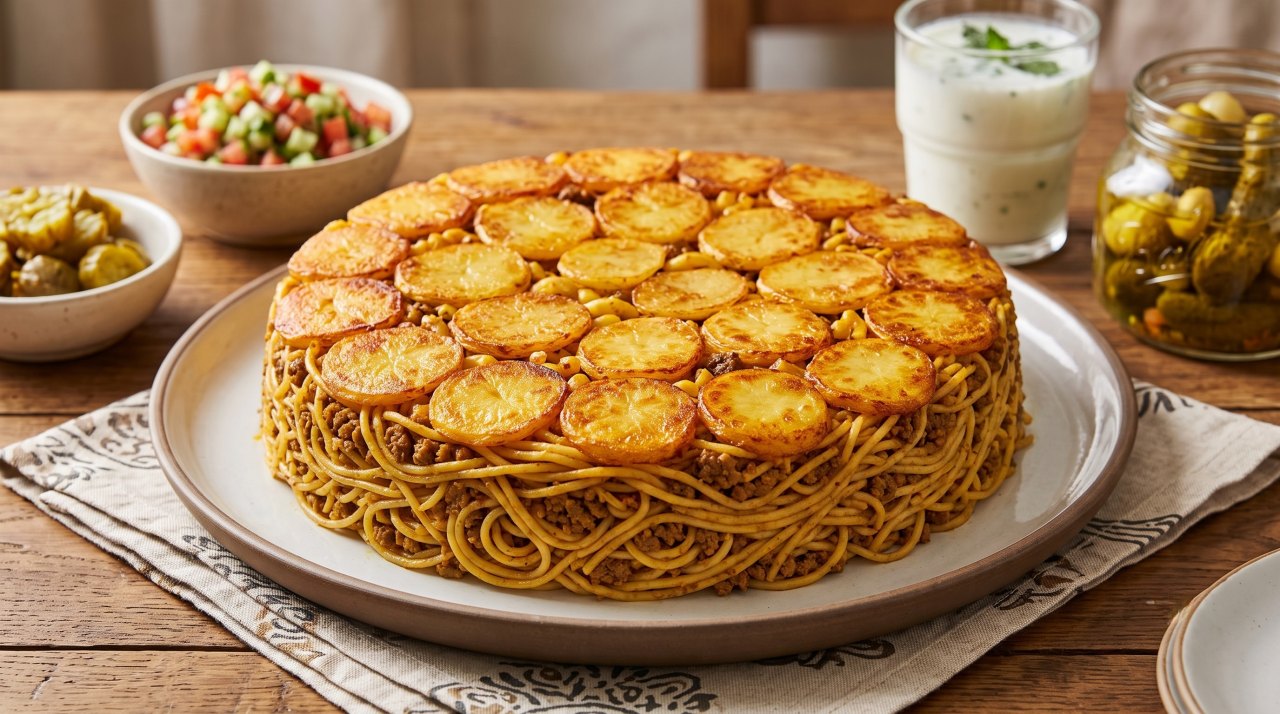
Persian Macaroni Recipe: The Iranian-Style Macaroni With All Tips and Tricks
In Iran, every pasta shape from spaghetti and bucatini to penne is called makaroni. One word, no distinction. This Persian macaroni recipe is built entirely around that tradition.
A deeply spiced meat sauce layered between strands of pasta, then slowly steamed in a covered pot until everything melds into one fragrant whole. Then flipped to reveal a golden, crackling crust everyone will fight over. Cinnamon, turmeric, dried rose petals, saffron. Persian rice technique applied entirely to pasta.
This Persian macaroni recipe is Iran’s answer to spaghetti Bolognese. Same structural DNA, completely different soul. Not a 20-minute dish. A ritual that rewards patience.
A Dish Born Between Two Worlds: The Story Behind Iranian Makaroni
Iranians have known noodles for centuries. Lakhsha, an ancient Persian noodle, has one of the oldest written records in culinary history. Reportedly from the court of Sasanian King Khosrow. The same word became lapsha in Russian and laska in Hungarian.
Modern pasta arrived as an aristocratic foreign food. Tehran’s first commercial pasta workshop opened in 1934. It produced 20–30 kilograms of pasta daily for embassies and wealthy households. Ordinary Iranians called it “foreign noodles.”
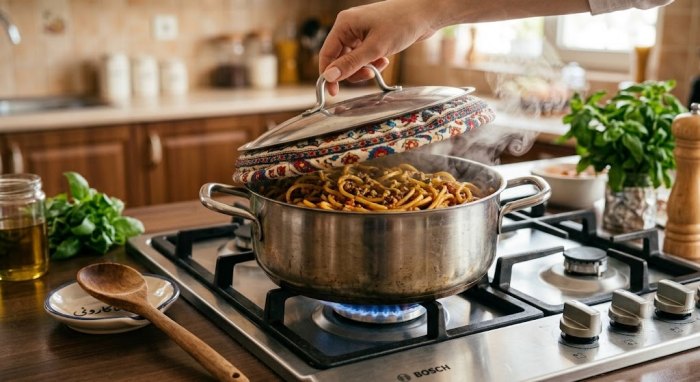
The Iranization of the Persian macaroni recipe came when home cooks re-steamed the pasta in a covered pot with a cloth under the lid. Exactly as they cooked rice, and invented something Italy never imagined. Domestic production took off in the mid-1990s. Today, makaroni is a childhood staple in millions of Iranian households.
Why Steaming Macaroni Is Uniquely Iranian
Steaming is a strictly Iranian cooking technique. In international culinary traditions, especially in Italy, steaming pasta is completely unheard of. Italian cuisine dictates that pasta should always be served al dente; the idea of cooking pasta in a covered pot to steam is not only foreign but also considered a serious culinary error that compromises the pasta’s texture. Yet this very technique defines Iranian macaroni, allowing the sauce to penetrate the starch layers deeply and creating the cherished, crispy tahdig that makes the dish uniquely Iranian.
Before You Begin: Two Things That Will Make or Break This Persian Macaroni Recipe
Before you dive into the recipe, there are two foundational elements that define the authentic Persian macaroni experience. Understanding and mastering these will transform your dish from a simple meal into a classic Iranian feast.
Tahdig: the Golden Crust That Everyone Fights Over
Tahdig means “bottom of the pot.” A golden, caramelized crust is the entire point, not a side effect. Crispy outside, sauce-soaked within. In an Iranian home, tahdig is cultural currency; the largest piece goes to whoever earned it. This Persian macaroni recipe works with three tahdig styles.
Pasta Spiral Tahdig
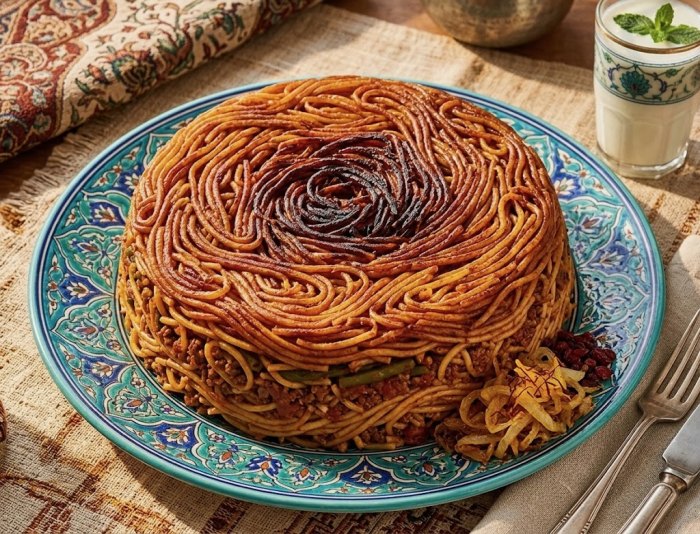
Pasta strands arranged in concentric spirals at the oiled base form the dramatic golden top after the flip. Most theatrical, most celebrated. Best for experienced cooks seeking the spaghetti-cake reveal that makes this Persian macaroni recipe iconic.
Potato Tahdig
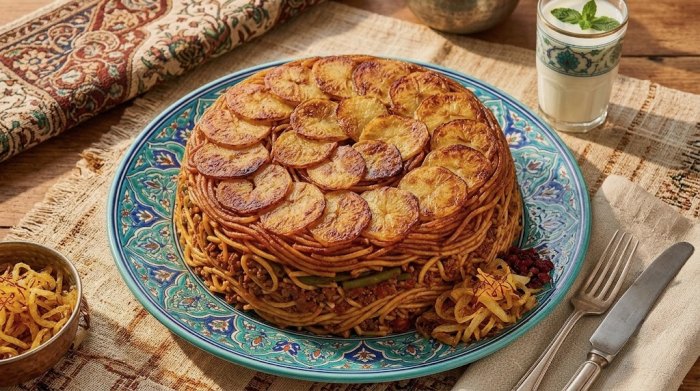
Thin potato rounds in an overlapping layer at the oiled base. Underside crisps golden; top stays tender, forgiving, nearly foolproof. Best for first-timers.
Lavash or Tortilla Tahdig
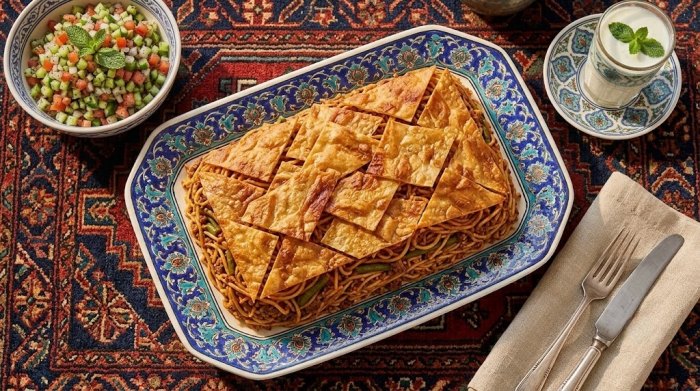
A piece of lavash or a flour tortilla, pressed into the oiled base, crisps like a chip. Shortest steaming requirement of the three. Best for weeknights.
Advieh: the Spice Blend That Makes This Dish Iranian
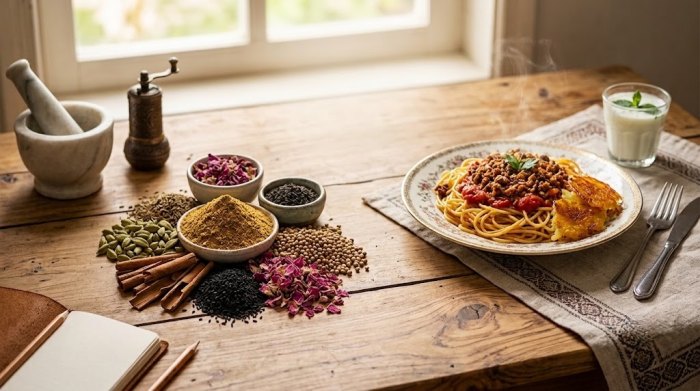
Advieh is precisely what separates this Persian macaroni recipe from every other pasta dish on earth. Without it, the dish is good. With it, unmistakably Iranian.
Combine equal parts ground cardamom, cinnamon, cumin, coriander, and dried rose petals for a blend with floral warmth, sweet depth, and earthy richness. Some families add nutmeg or dried lime powder (limu omani). Find pre-made advieh at Persian or Middle Eastern grocery stores. No access? Equal parts ground cinnamon and nutmeg are a genuine substitute.
Ingredients for Traditional Iranian Makaroni With Meat Sauce
- Spaghetti or bucatini500Grams
- Ground beef (or 50/50 beef-lamb)500Grams
- Onions2Large
- Garlic3Cloves
- Tomato paste3Tbsp
- Ground turmeric1Tbsp
- Spices1Tbsp
- Water1/2Cup
- Lemon juice1/2Lemon
- Salt and black pepperTo taste
- Sunflower, vegetable, or olive6Tbsp
- Potatoes2Medium
- Saffron threads1Samll pinch
The Full Persian Macaroni Recipe: Traditional Makaroni With Meat Sauce
The Persian macaroni recipe has 4 main steps you should follow along.
1. Making the Meat Sauce
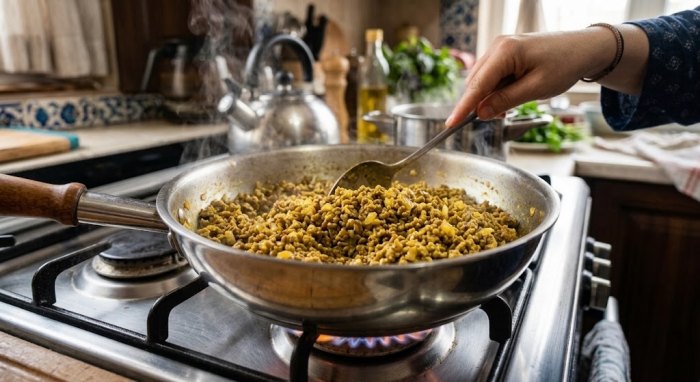
Heat 2 tablespoons of oil over medium. Finely dice and cook the onion for 10 to 12 minutes, until deeply golden. Add meat; cook until browned.
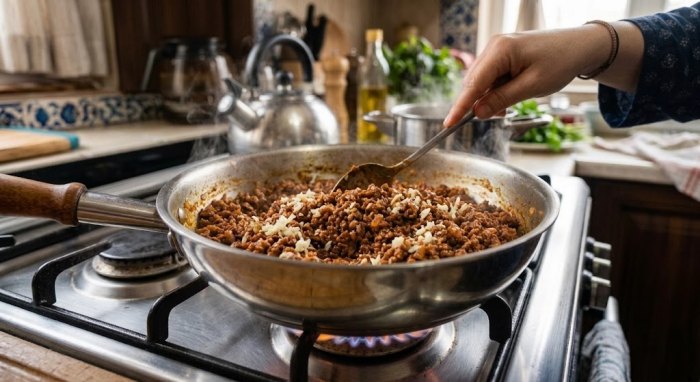
Add minced garlic, turmeric, and tomato paste; fry for 4 to 5 minutes, stirring constantly, until the paste darkens and the oil turns orange.
Add advieh, water, and lemon juice; season with salt and pepper. Simmer over low heat for 20 to 30 minutes, until thick and fragrant, still pourable.
2. Boiling the Pasta
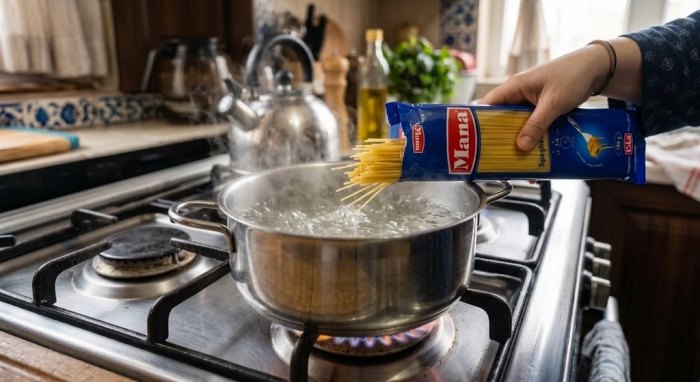
Cook in heavily salted water. Pull the pasta 2 to 3 minutes before al dente; it finishes during steaming.
Drain and rinse under cold water immediately. In this Persian macaroni recipe, rinsing is required to prevent clumping during layering. This technique is exclusive to Persian macaroni to prevent clumping during layering; however, be warned that doing this in any other pasta dish would completely ruin the texture.
3. Layering and Steaming
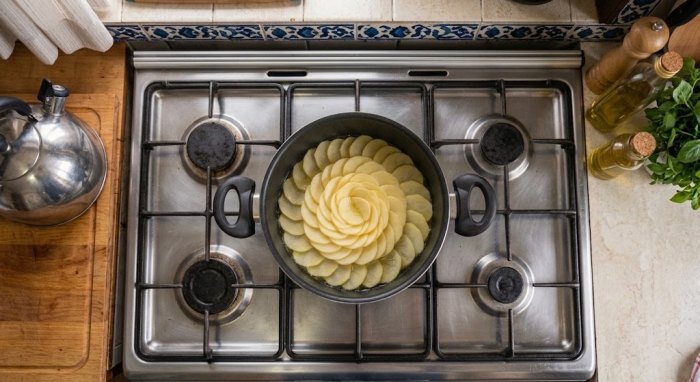
Set a heavy-bottomed nonstick pot over medium heat. Add 4 tablespoons of oil generously, plus saffron water if using. For potato tahdig, arrange potato rounds in a tight overlapping layer.
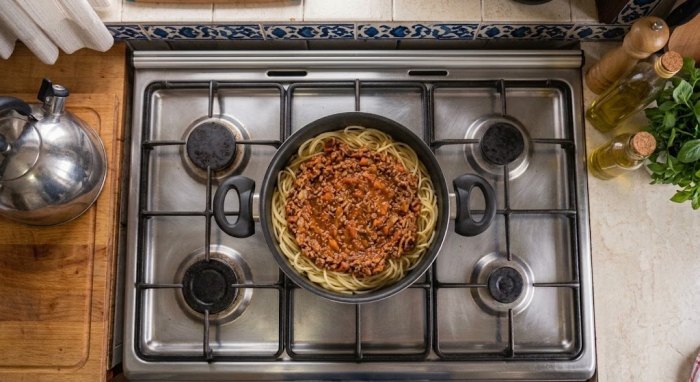
Alternate pasta and sauce in three layers, finishing with sauce on top. Do not pack the layers because steam needs space.
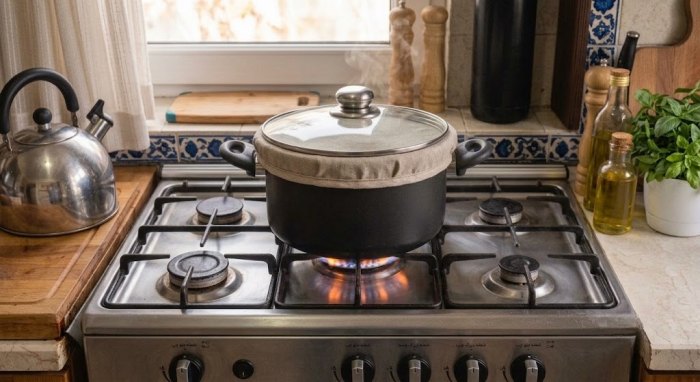
Wrap the pot lid tightly in a kitchen towel to absorb steam. Do not skip this. Cook on the lowest possible heat for 40 to 50 minutes. In the final 5 minutes, increase to medium briefly to reinforce the crust, then re-cover.
The Flip: The Most Theatrical Moment in Persian Cooking
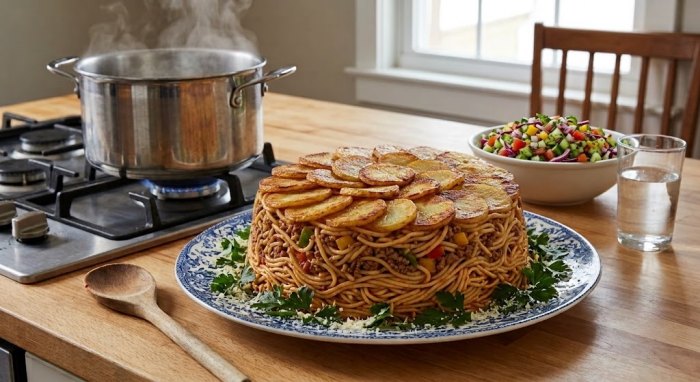
Select a plate at least 2 inches wider than the pot. Rest off the heat for 2 minutes to firm the crust. Run a spatula around the inner edge. Grip the pot with a towel, hold the plate flat against the opening, and invert in one confident motion. The macaroni releases golden side up. If it sticks, tap the base firmly or lay a cold, damp towel over the pot base; the temperature contrast loosens the crust.
What Types of Ingredients You Should Choose for Persian Macaroni
Thick spaghetti is traditional. holds its shape during steaming and creates the most satisfying tahdig. Regular spaghetti is the most common household choice and works excellently in this Persian macaroni recipe. Short pasta eliminates the spaghetti-cake reveal that defines this Persian macaroni recipe. Break long pasta in half for easier layering, cleaner serving. For gluten-free, use brown rice pasta, cooked for 4 minutes under the package time.
Oil, Saffron, and What Any Good Persian Macaroni Recipe Needs From Both
Persian macaroni requires more oil than Italian pasta would use. It forms the tahdig, coats the pasta during steaming, and delivers the dish’s characteristic richness. Use neutral oil, olive oil, or ghee. Too little at the base is the most common beginner mistake.
Saffron is optional but rewarding. Grind a pinch of threads with sugar, dissolve in 2 tablespoons of hot water, and steep for 10 minutes. Most families make this Persian macaroni recipe without saffron; turmeric in the oil provides beautiful color at a fraction of the cost.
Everything That Can Go Wrong With This Persian Macaroni Recipe, and Exactly How to Fix It
- Burned tahdig: Heat too high or too little oil. The interior is usually fine; serve from the pot. Fix: a heavier nonstick pot, more oil, lower heat, and a heat diffuser on gas.
- No tahdig formed: Heat too low or insufficient oil. Extend steaming 10 minutes; listen for sizzle at the base.
- Tahdig collapsed on flip: Plate too small, or pot inverted before crust set. Rest longer; use a wider plate.
- Mushy pasta: Pasta was fully cooked before steaming. Always undercook by 2 to 3 minutes.
- Dish too dry after steaming: Sauce over-reduced before layering, or lid poorly sealed. Sauce must be pourable; the towel-wrapped lid is non-negotiable.
The Iranian Table: How to Serve Makaroni Like It’s a Family Occasion
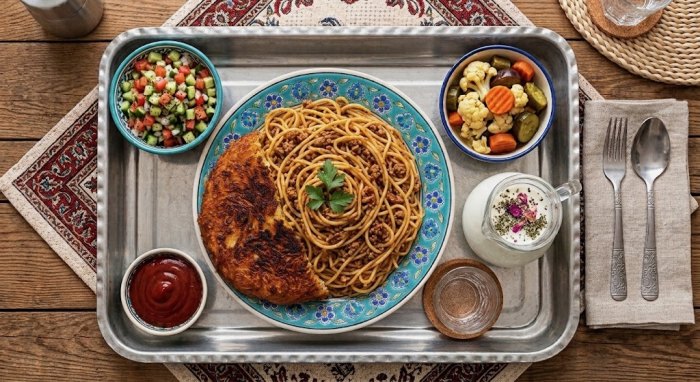
Serving this Persian macaroni recipe means more than just the macaroni itself. These belong on the table alongside it:
- Shirazi salad: finely diced cucumber, tomato, and red onion with lemon and dried mint. The essential fresh counterpoint to rich macaroni
- Torshi: Iranian pickled vegetables — sharp, acidic, essential for cutting through the richness
- Ketchup: yes, ketchup — beloved Iranian tradition, especially for children and teenagers. It entered the culture in the latter part of the 20th century and has since been fully claimed. No apologies.
- Doogh: Iran’s sparkling yogurt drink with dried mint and salt. Cold doogh alongside rich makaroni is one of the great Iranian flavor pairings.
Also, carry the covered pot of this Persian macaroni recipe to the table before flipping — the whole family should witness the reveal. The golden tahdig makes any weeknight feel like a celebration. Slice like a pizza and distribute intentionally. Fighting over the largest piece is traditional.
Nutrition at a Glance
The following values are estimates based on standard ingredient proportions and may vary depending on the specific meat-fat ratio and the amount of oil used.
| Estimated Amount | Nutrient |
| ~550 kcal | Calories |
| ~25g | Protein |
| ~20g | Fat |
| ~65g | Carbohydrates |
Answers to the Questions Everyone Asks
Spaghetti is most common. Short pasta changes the character of the dish.
Pure practicality: easier layering, cleaner serving, less chaotic eating. No philosophy required.
A cultural habit dating back to the mid-20th century, when Western foods entered Iran. The sweet-acid contrast against the spiced sauce works. No justification needed.
Yes, use a heavy-bottomed stainless pot, a generous amount of oil, lower heat than you’d expect, and a heat diffuser on gas stoves.
Comments